
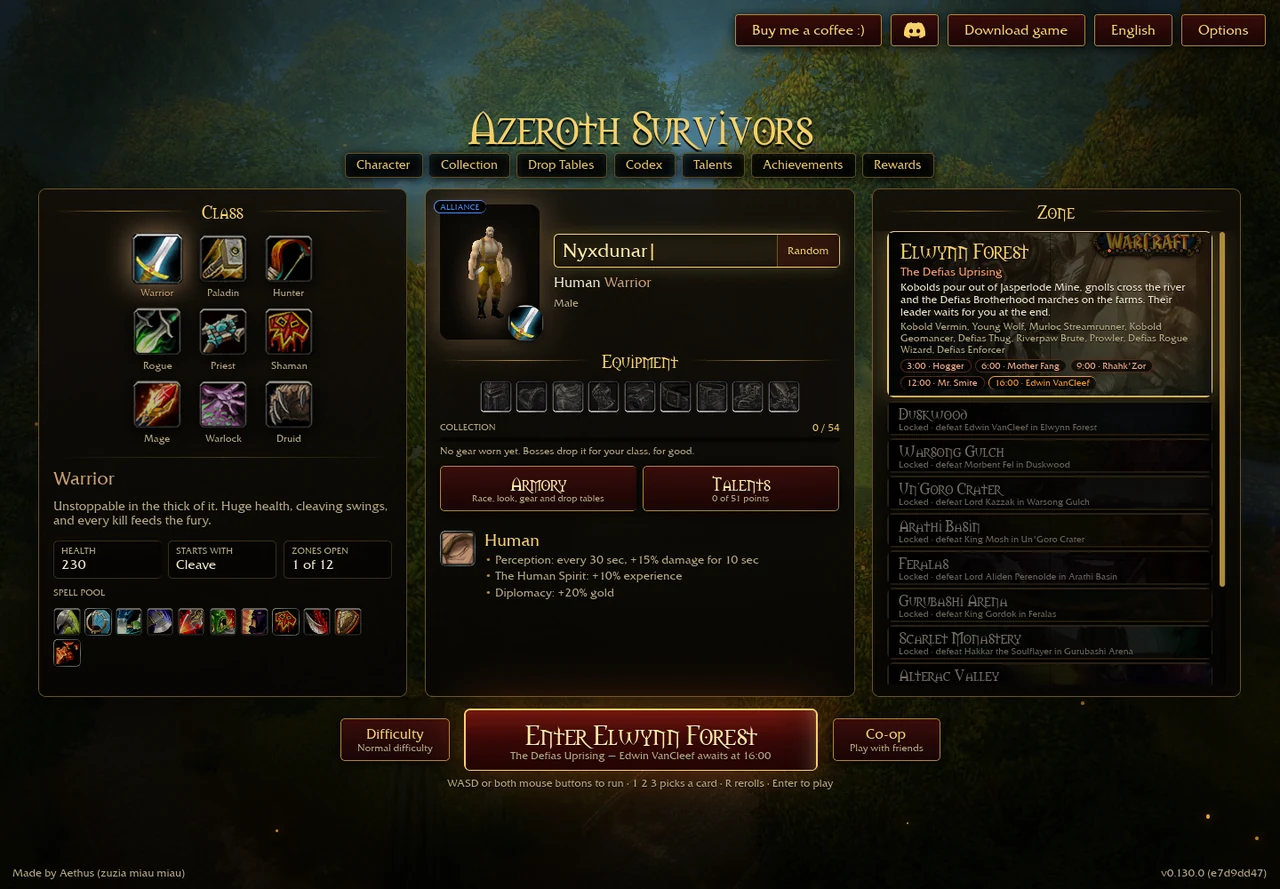
Choose the route for your current character
These are conditional routes assembled from the original client’s talent descriptions. Check prerequisites and the points you have already spent in the game before following an endpoint. [1]
| Route | Talents to inspect | What makes it work | Condition that changes the choice |
|---|---|---|---|
| Fury | Rampage → Flurry → Blood Craze → Bladestorm | Rampage adds Whirlwinds on kills, Flurry adds repeat hits, and Blood Craze turns a share of damage into healing. Bladestorm starts with Whirlwind and adds free casts every three seconds. | Kill-based casts need kills. Damage-based healing needs damage delivered; it is not a fixed full-health refill. |
| Protection | Shield Slam support → Shockwave → Titan | Titan starts with Shield Slam, raises the damage-reduction ceiling and adds maximum-health scaling. | A maximum-health route and a direct Whirlwind route do not value every offer in the same way. Check the active branch before choosing. |


What to prioritise during the run
- Before Bladestorm, maintain Cleave and choose usable wave damage rather than assuming the capstone is already casting for you.
- With the Fury engine active, favour the attacks named by its talents. Do not add a separate attack only to fill every available choice.
- When contact damage is the limiting factor, compare recovery that depends on your damage with the defensive route you can currently afford.
- With Titan selected, evaluate health and supported Shield Slam effects together. Do not judge the build solely by a direct-damage number.

This is an editorial choice order, not a guaranteed card sequence. The offered upgrades and your current permanent investment still determine which step is available. [1]
When the intended build is not ready
A missing Whirlwind offer is less destructive once Bladestorm is active than it is on a fresh character. Before the capstone, pick for the present attack bar. If a boss has no adds, Rampage’s kill engine is not evidence of sustained boss output.
Before changing the whole plan, identify the failure: no room to move, too little recovery, or too little damage on the target. Change the part that addresses that failure, then compare another run with similar talents and equipment.
Check the starter and trigger before copying a build
Baseline starter: Cleave. Talents can replace it; use the route conditions above rather than treating this as the opening for every developed character. [1]
A starting-health number from an old reconstruction is not enough to rank a current original Warrior. Race, talents and permanent equipment also change the comparison.
Record the game version, zone, difficulty, selected capstone, permanent equipment and the card that changed the run. Comparing two different progression states cannot establish that a single spell was better. Use the meter carefully →
Arms: bleed-supported direct hits
Trauma links damage to enemies carrying your DoTs; Deep Wounds supplies a critical-hit bleed. Sweeping Strikes supports nearby hits, and Mortal Wounds changes the opener to Mortal Strike. Its kill-based refresh needs a killing blow.[1]
- Before the endpoint, keep Cleave functional and use Rend when it serves the bleed plan.
- Support the allocated direct-hit and bleed interactions; do not count kill refreshes as constant isolated-boss casts.
- If contact ends the run, take recovery or defence before adding another conditional damage effect.

This is an editorial route decision from the preserved snapshot, not a complete legal point allocation or measured best build. Inspect prerequisites and gates →[1]
Sources & checks
Warcraft artwork © Blizzard Entertainment.
- Aethus · original game ↗ (external website, opens in a new tab) · Warrior talents and route conditions; v0.127.0–0.130.0 snapshots, 29 Oct–1 Nov 2026.